
Central Park Historic District Apartment Renovation: Balancing Preservation with Modern Luxury

How Nail on the Head transformed a poorly laid out Upper West Side co-op into a functional, high-end home while navigating strict building requirements.
When longtime residents of a prestigious Central Park Historic District building finally decided to renovate their apartment, they knew they needed a contractor who truly understood the complexities of luxury NYC renovations in prewar buildings. After interviewing several firms, they chose Nail on the Head LLC—and according to their architect, the relationship made all the difference.
Understanding the Challenge
"Walking through it, it was poorly laid out and needed an update for reasons across the board—lifestyle, function, wear and tear—it was time," says Chris Amplo, founder of Nail on the Head LLC. The apartment required a complete gut renovation, but the clients had been hesitant for years, debating whether to move, stay as-is, or commit to a full renovation.
"They were indecisive about doing it or not doing it, but they did it," Chris recalls. "It's a very nice building, and they are wonderful clients. The idea was to make the apartment current and functional for the way that they lived by creating a better layout for for the bedrooms and adding a proper ensuite bath and a walk-in closet."
What stood out most to Chris was the immediate personal connection. "The homeowner and I hit it off from day one. Our kids both love music," he says, highlighting how the right contractor-client relationship can make even complex projects run smoothly.
Setting Expectations: Prewar Buildings and Timeline
For Chris and his team, understanding NYC's prewar architecture is essential. This 1920s-1930s building, like many in the Central Park Historic District, came with its own set of challenges that only experienced contractors know how to navigate. Nail on the Head viewed these as opportunities to demonstrate their expertise in managing the challenges that inevitably arise in historic building renovations.
One of the biggest challenges Chris flagged from the beginning was the building's timeline requirements.
"There's an ongoing trend in buildings where they want construction to be completed in 120 days, and you can't gut renovate an apartment like this in that time period," he states. "We flagged that as an issue upfront, and we gave them a timeline of nine months."
This kind of upfront honesty about realistic timelines is a hallmark of experienced NYC contractors who prioritize setting clear expectations.
The Design Vision: Maximizing Central Park Views
Working alongside architect Alex Shkreli of PACS Architecture, Nail on the Head brought the homeowners' vision to life. Alex had previously completed another renovation in the same building, which gave him intimate knowledge of the layout and structural challenges.
"I put together a schematic design showing what it could be like—converting bedrooms, adding a bathroom, and making other improvements like enhancing the primary bedroom and kitchen layout," Alex explains. "We wanted to open it up. The living room area had been divided when someone added a room in a previous renovation, so we removed that wall and made it large again."
The apartment's most valuable asset was obvious. "What's cool is it faces Central Park—the view is incredible," says Alex. "The living-dining room faced Central Park with beautiful windows, and that view makes it unique. It was important to emphasize that asset."

Key renovation objectives included:
Converting the layout from 4 bedrooms to a more functional 3-bedroom design
Adding a luxury ensuite bathroom with high-end fixtures
Installing a spacious walk-in closet in the primary suite
Opening up the living spaces to maximize natural light and park views
Updating all systems while maintaining the building's historic character
Managing Building Surprises and Scope Changes
Historic building renovations in Manhattan rarely go exactly as planned, and this project was no exception.
"The job had its surprises," Chris notes. Beyond heating and plumbing modifications that weren't clearly outlined in the alteration agreement, the team also had to navigate working in a building with many other residents, which required collaboration with the architect and building management.
The project also evolved during construction, with the homeowners adding custom elements as they saw the space come to life. "They added millwork near the end of the job after deciding they wanted to create some built-ins, which were not initially planned," Chris recalls, demonstrating the flexibility that high-end renovations often require.
High-End Finishes and Craftsmanship
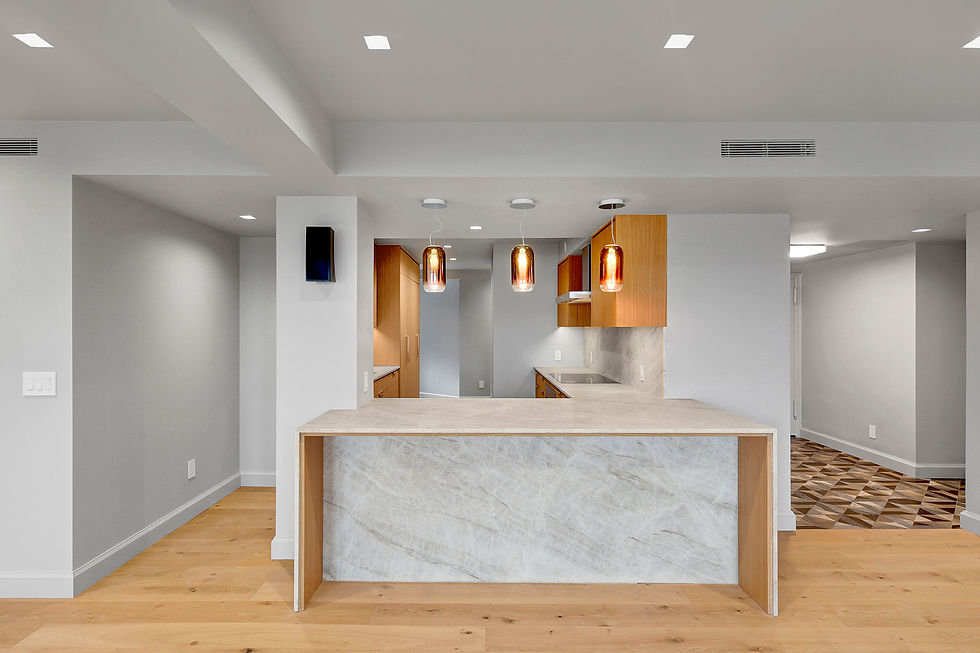
The homeowners invested in premium materials throughout the renovation. "It looks very nice: high-end finishes, but not over-the-top," says Chris. "Ultimately, it came out beautifully: They especially love their new kitchen; and they’re super happy with the custom millwork."

The project featured:
Custom Kitchen: Designed for both functionality and entertaining, with high-end appliances and finishes
Extensive Millwork: Custom built-ins and cabinetry throughout, with additional pieces added during construction
Luxury Bathrooms: Modern fixtures and finishes that complement the building's prewar character
Premium Flooring: Sleepers replaced in floors for proper leveling and sound insulation
Historic-Appropriate Windows: Replacements that met preservation standards while improving performance
Custom Details: Fireplace details and other bespoke elements
The Architect's Perspective on Collaboration
According to Alex Shkreli, choosing the right contractor was critical to this project's success.
"We brought in several contractors, including Chris," Alex recalls. "The homeowners liked his work, but the most important thing was the relationship—they really liked him personally."
Alex emphasizes that this personal connection translated into professional excellence throughout the build. "Being a renovation in an existing old apartment, there are always things that happen once you start working," notes Alex. "That's why you need a good contractor—you might need to go into the apartment below and could run into plumbing issues."
Alex praises Chris's approach to managing the inevitable challenges: "The homeowners were very supportive and understanding of the process. It wasn't a stressful project—it went smoothly, and the homeowners were very happy at the end. On a project like this, you want them to be happy with both the outcome and the process, and Chris delivered on both."

The Three Keys to Renovation Success
According to Alex, every successful renovation comes down to three critical factors—and Nail on the Head delivered on all of them.
"Timing, pricing, quality. Those are the three keys for every project," Alex explains. "There's collaboration between us and the contractor because we go on site a lot to see how the project is coming along.”
Timing: Nail on the Head set a realistic timeline from the start and delivered on schedule, despite building surprises and scope additions.
Pricing: Through transparent communication and detailed planning, the project stayed on budget even with the change orders required by building-specific demands.
Quality: "Transparency is very important, and so is the budget," explains Alex. "We pride ourselves on doing very solid sets of drawings. We try to understand what's needed for the contractor to price and build it, and we work to hold everyone to the contract price."
Why Prewar Building Expertise Matters
Alex offers valuable context for why choosing a contractor experienced in NYC's prewar buildings is non-negotiable:
"This building is a prewar building built in the early 1920s-1930s, and they're all built the same way. There's a steel frame encased in concrete, raised floors, and very predictable layouts. Even if I go to a prewar building I've never worked in, I can tell you exactly what to expec: there's a nannies' room with a tiny bathroom, a small kitchen, a dining room next to living room with an arched opening, and bedrooms with no closets."
He continues: "We have the same challenges every time: expand closets, kitchens, and bathrooms. That's why you need a good contractor."
This deep knowledge of building systems, layouts, and potential complications is exactly what Nail on the Head brings to every project.
Essential Insights for Upper West Side Renovations
For homeowners considering similar renovations in Manhattan's historic districts, this project offers several critical lessons:
1. Choose Experience Over Price "You need to know what you're doing. You need to understand the process and how things work, how buildings work together," advises Alex. The relationship and expertise matter more than saving a few thousand dollars on the bid.
2. Set Realistic Timelines Quality gut renovations in prewar buildings cannot be rushed. The 120-day timelines that some buildings request simply aren't feasible for comprehensive renovations.
3. Budget for Building-Specific Requirements Historic district buildings and prewar co-ops often have specific requirements that aren't fully documented in alteration agreements. Work with a contractor who can anticipate and navigate these challenges.
4. Prioritize the Relationship "The most important thing was the relationship," Alex emphasizes. You'll be working closely with your contractor for months—choose someone you trust and connect with personally.
5. Expect Scope Evolution Luxury renovations often evolve as clients see their vision come to life. Work with a team that can accommodate thoughtful additions without derailing the timeline or budget.
The Final Result: A Modern Home with Historic Soul
The transformation successfully achieved everything the homeowners wanted: a more functional layout, luxury finishes, and a design that maximizes those irreplaceable Central Park views—all while respecting the building's historic character.
About Nail on the Head LLC
Nail on the Head LLC specializes in luxury residential renovations throughout New York City, with particular expertise in historic district buildings, prewar co-ops, and high-end Manhattan apartments. Founder Chris Amplo brings deep knowledge of NYC building systems, preservation requirements, and the unique challenges of renovating in the city's most prestigious neighborhoods.


Comments